

Digital Window Displays in NZ Real Estate Marketing
Many property buyers start their search online, but plenty still walk past a real estate office on the way to a viewing. The shopfront is the one marketing channel that runs 24 hours a day, sits on the street where local buyers already are, and reaches people who are not searching yet. Most agencies still treat it as a stack of printed flyers and a tired sign. This article explains how digital window displays fit into real estate marketing NZ strategy, what content earns attention after dark, which hardware survives hard sun, and how to tell whether the screen is producing enquiries.
Table of Contents
- Quick Takeaways
- Why Window Displays Still Matter for Property Marketing
- Where the Window Fits in Your Marketing Mix
- Content That Earns Attention on a Screen
- Hardware for New Zealand Shopfronts
- Managing Content Remotely
- Comparing Window Display Options
- Measuring Results and Avoiding Mistakes
- Rolling Out Across NZ Cities
- Frequently Asked Questions
- References
Quick Takeaways
| Key Insight | Explanation |
|---|---|
| Treat the window as an always-on listing channel | A screen keeps working after staff leave. Schedule evening and weekend content for people walking past, not only for daytime visitors. |
| Choose hardware for sunlight first | A shopfront that gets hard afternoon sun needs sunlight-readable screens or UV-protected LCD units. A dim or faded panel costs you credibility before it costs you enquiries. |
| Design for a glance from across the footpath | Passersby give a screen a second or two. Use large property photos, one price or result per frame, and a short call to action. |
| Update sold and under-offer status within a day | Stale listings on a screen signal neglect. Assign one person to own the content calendar and the change process. |
| Feed window enquiries into the same CRM as your other leads | If the screen has its own tracking and your CRM does not, you cannot tell which window content produced a viewing request. |
| Use premium backlit paper for information that changes slowly | A3 and A4 backlit paper suits suburb facts, agent bios and valuation guides. Reserve the screen for content that needs motion or frequent updates. |
Why Window Displays Still Matter for Property Marketing
A real estate office window is a billboard that people pass without deciding to look. For an agency on a main road in Auckland, Hamilton or Tauranga, that means reaching locals who are curious about what is selling on their street but have not opened a property portal this week. The window does not wait for a search query. It finds people on the way to work, the school run or dinner.
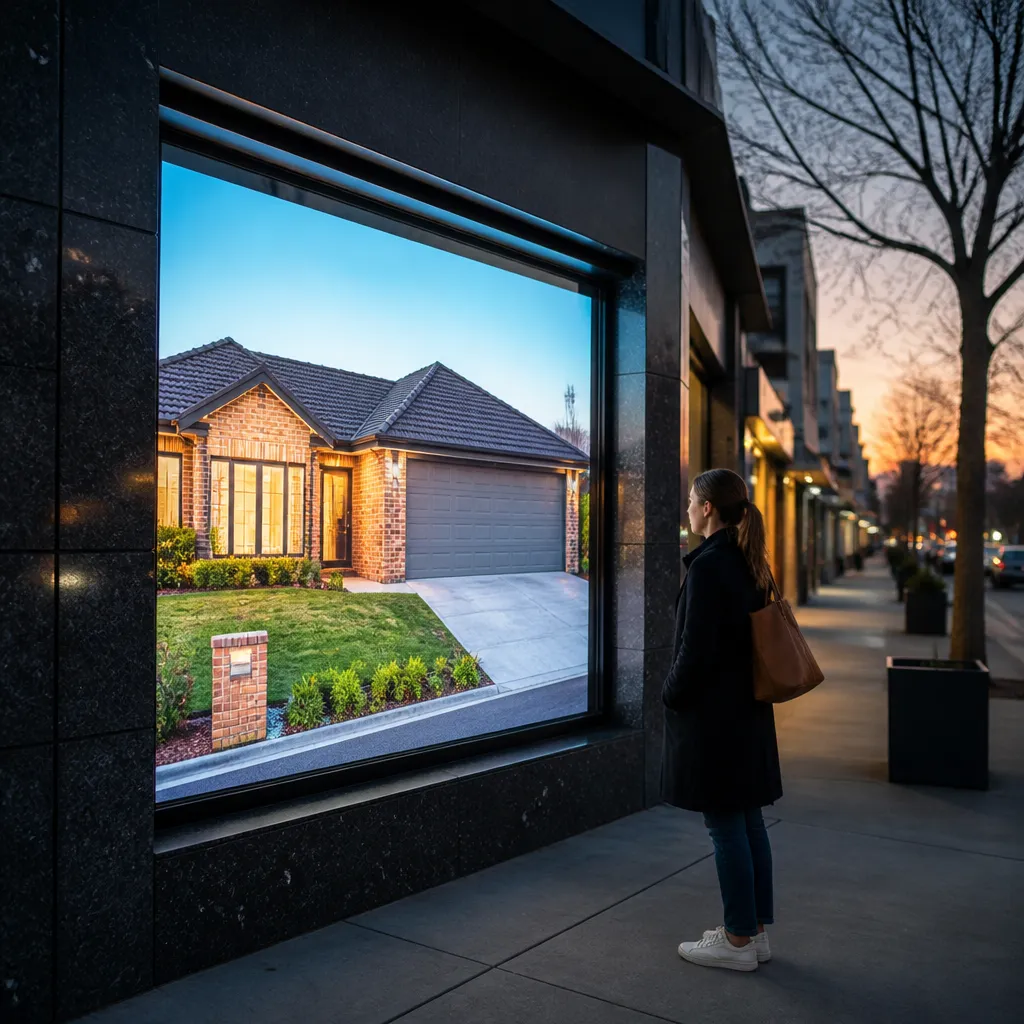
Agency principals often ask what to put in the window, and that question is usually a sign the window is doing less work than it could. One post in an online community group described an office on a very busy road looking for ideas on what to display. The honest answer is that a static poster rarely competes with a screen that changes, and a screen that never changes is only a poster with a power cable. The value comes from keeping the display current and relevant to the street outside.
In practice, the window also works as a credibility signal. A buyer who sees a clean, bright, up-to-date display learns something about the agency before they walk in. A window with faded flyers from last season tells them the opposite. Treat the glass as the first conversation with a potential vendor or buyer, because it is.
Where the Window Fits in Your Marketing Mix
The window is not a replacement for portal listings, social campaigns or email follow-up. It is the local, physical layer of the same strategy. Its job is to make the agency visible to people who are already in the suburb, and to give them a reason to stop, read and remember the name.
Window displays versus online listing portals
Portals are good at reaching people who are already searching. The window reaches people who are not searching but are close enough to act. A vendor in a neighbourhood where you have just sold three homes may never type your agency name into a search bar, but they will notice a screen that shows those sales in their own street. Use the window to build local recognition, and use portals to capture active buyers.
Where a screen beats a printed flyer
A printed flyer is fixed the moment it is printed. A screen can rotate open home times, show a new listing at 8am, switch to a sold result by lunch and show a recent auction result that evening. That speed matters in a market where listings move quickly. A flyer still has a role for detailed information that people want to take home, such as a property summary or a valuation guide, but the screen should carry the news.
A common mistake is splitting the budget evenly between screen and print without a plan for each. Assign the screen to anything that changes weekly, and assign paper to anything a visitor might want to keep. That division keeps both channels useful rather than competing for the same glass.
Content That Earns Attention on a Screen
Most window displays fail on content, not hardware. A screen that loops a company logo and a generic slogan gives passersby nothing to act on. The content should answer the question a person has when they glance at the window: what is happening on my street, and does it affect me?
Sold and under-offer updates
Showing recent sales is one of the strongest uses of a window screen because it is local proof of activity. Keep the frame simple: the address or suburb, the sale outcome, and the agent’s name. Remove the result after a set period so the screen never looks like an archive. A sold frame with a clean photo does more than a paragraph of claims about market expertise.
Pro tip: Photograph sold properties from the street before the sign comes down, so the screen can show a fresh image rather than a generic stock photo.
Open home times and auction countdowns
Time-sensitive content gives people a reason to return to the window. An open home schedule for the coming weekend, or a countdown to an auction, creates urgency that a static display cannot match. Update these frames on a fixed rhythm so regular passersby learn when to check. Consistency builds habit, and habit builds enquiries.
Suburb market snapshots
Local suburb data is valuable to owners who are wondering about their own home. Show a simple number, such as median sale price or days on market, with the suburb name and the date it was checked. Avoid dense charts, which are unreadable from the footpath. One clear figure per frame works best, and the source and date must be accurate before it goes on screen.
Pro tip: Write every screen frame as if it will be read for two seconds. If a frame needs a paragraph to make sense, move the detail to a printed sheet inside the door.
Hardware for New Zealand Shopfronts
New Zealand shopfronts face bright light, strong UV and, in many towns, wind and salt air. A screen that looks sharp in a showroom can wash out by midday on a sunny street. Hardware choices decide whether the display works for years or becomes a dim panel that staff stop noticing.
UV protection and fading
Window glass sits in direct sunlight for long hours, which is hard on any display surface. UV-protected LCD screens are designed for that exposure and reduce the risk of fading and colour shift over time. Ask any supplier to explain how the screen is protected, rather than accepting a general claim about durability. A display that fades within a year is an expensive way to advertise.
Sunlight-readable screens for glare-heavy frontages
Some shopfronts are fully exposed to afternoon glare, and standard indoor screens lose contrast quickly in those conditions. Sunlight-readable screens hold their image in bright light, which keeps the content legible when a passerby stops on a sunny footpath. If your window takes hard sun for part of the day, spec the screen for that light level rather than the lighting in the showroom.
Hanging cable LCD versus wall-mounted backlit units
Hanging cable LCD displays suit windows where the screen needs to sit at eye level and the glass has limited depth. They can be positioned to face the street without taking up much internal space. LED backlit real estate displays suit frontages where brightness and continuous operation matter most, including after dark. Choose the form factor based on the window layout, the sun exposure and the mounting point, not on the display specifications alone.
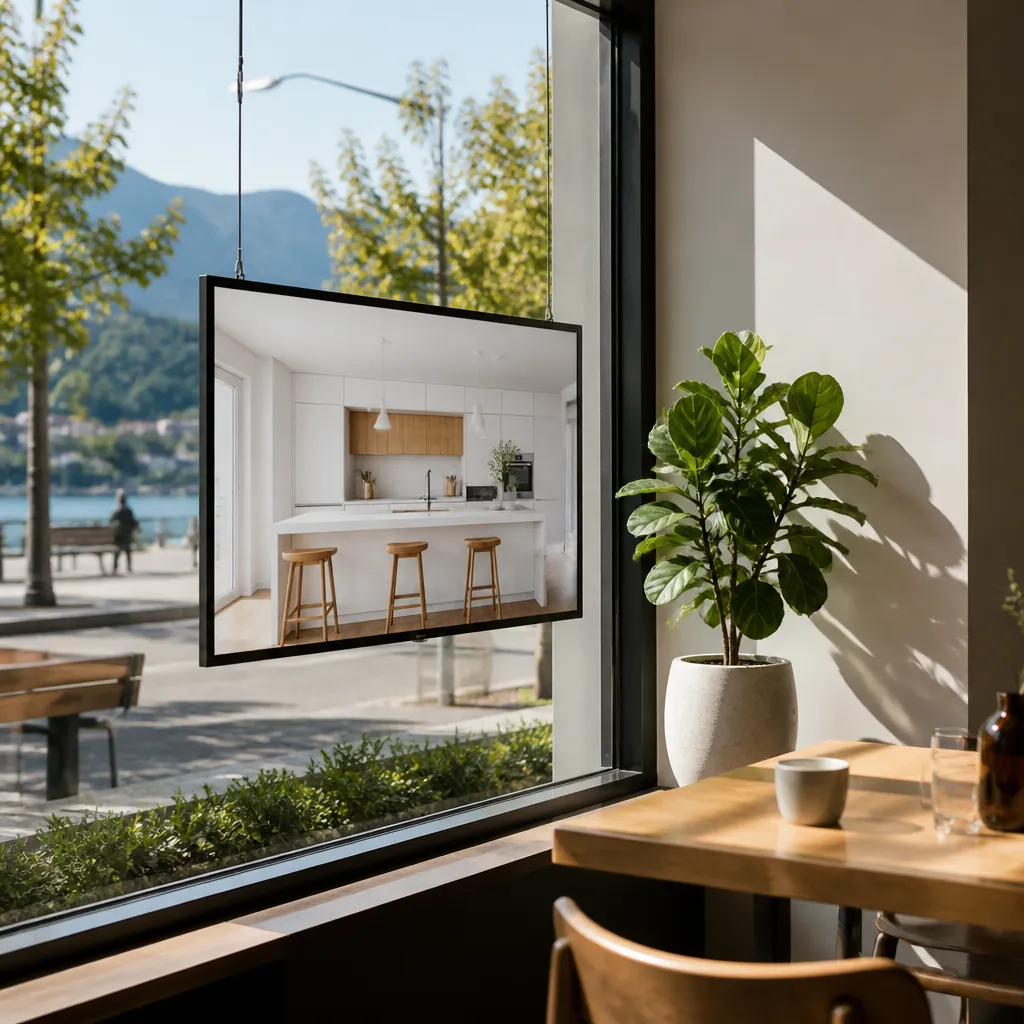
Before any install, check the mounting plan with the building owner and confirm power and network access. Cable routing is the detail most often left until the day of installation, and it can delay the whole project. Plan it early and the screen goes live on schedule.
Managing Content Remotely
A window display is only as good as the process behind it. If updating content requires someone to drive to the office, the screen will fall behind the market within weeks. Remote management is what turns a display into a working marketing channel.
Remote updates over WiFi
Remote content management over WiFi lets the marketing team change frames from the office, a car or a home desk. A new listing can go live the same morning it is confirmed. This matters most for agencies with several sites, because the same content plan can be applied across offices without a site visit for each change.
Scheduling by time of day and day of week
Android-based scheduling and automation let you set different content for different times. Show open home details on Friday afternoon, sold results on weekday mornings and a brand frame overnight. The schedule should reflect when people actually walk past, which you can check by spending an afternoon watching the street. Guessing at peak times wastes content that nobody sees.
Connecting screen content to your CRM
Software subscriptions that include CRM and CMS integration let the content system and the customer database speak to each other. That connection matters when a passerby later becomes a vendor enquiry, because the agency can see where the relationship began. Without it, the screen is an isolated marketing cost with no visible return.
Pro tip: Set a fixed weekly content review, even if it takes 20 minutes. Stale frames are the most common reason a window screen loses its audience, and a short review catches them before passersby do.
A window screen that shows last month’s listings tells passersby more about the agency’s habits than about the properties on sale.
Comparing Window Display Options
Agencies usually choose between three approaches: printed backlit paper, hanging cable LCD displays and LED backlit real estate displays. Each suits a different job, and the best setup often combines two of them. The table below compares where each one earns its place and where it falls short.
| Approach | Best use | Main trade-off |
|---|---|---|
| Premium backlit A3 or A4 paper | Suburb facts, agent profiles, valuation guides and other information that changes slowly | Needs manual replacement and cannot show motion, video or same-day sold results |
| Hanging cable LCD display | Eye-level listing and sold updates in shopfronts with limited depth or where the screen should sit clear of the glass | Requires a planned mounting point and careful cable routing before installation |
| LED backlit real estate display | Continuous, bright content visible at night, such as listings and open home times on a busy street | Higher upfront investment, and the content plan must be strong enough to justify constant brightness |
In practice, many agencies start with a single screen for listings and sold results, then add backlit paper for supporting information once the team has a content rhythm. Adding hardware before the content process is working tends to produce a well-lit display showing old information.
Measuring Results and Avoiding Mistakes
A window display should be judged by enquiries, viewings and listing appointments, not by how attractive it looks in a photo. Measurement is harder for physical media than for online ads, but it is not impossible. Set up the basics before the screen goes live.
Tracking enquiries that start at the window
Give window-driven enquiries a clear source in your CRM. A dedicated phone number or a short web address printed on a sticker near the screen can show when a passerby follows up. Ask every new enquiry how they heard about the agency. Over a few months, you will see whether the window is generating real conversations or simply being admired.
Common mistakes that waste the screen
The most common mistake is running the same loop for months. The second is putting too much text on each frame. The third is placing the screen where glare hides it for half the day. A fourth mistake is treating the window as a branding exercise with no call to action. Every frame should either show something new or ask the viewer to do something, such as book an appraisal or call about an open home.
Another frequent error is ignoring the neighbours. A screen that shows properties from a rival office two doors down will not reflect well on your agency, so keep the focus on your own listings and results. A tidy window earns more trust than a loud one.
Rolling Out Across NZ Cities
Agencies with offices in more than one city need a window strategy that works in each location without duplicating effort. A central content calendar can serve Auckland, Wellington, Christchurch, Tauranga, Hamilton and Dunedin, with local frames added for each suburb. The design stays consistent, and the market detail changes with the street.
Building a shared content library
Create master templates for listings, sold results, open homes and suburb snapshots. Each office then fills in the local details and submits them for approval before they go live. This keeps branding tight across sites and stops a single office from publishing a figure that has not been checked.
Local frames for each suburb
A window in Dunedin and one in Auckland face different buyers, different property types and different sale timeframes. Local frames should reflect the street outside, such as recent sales on that road or an open home in the next suburb. Avoid national statistics on a local screen, because passersby want to know what is happening near them.
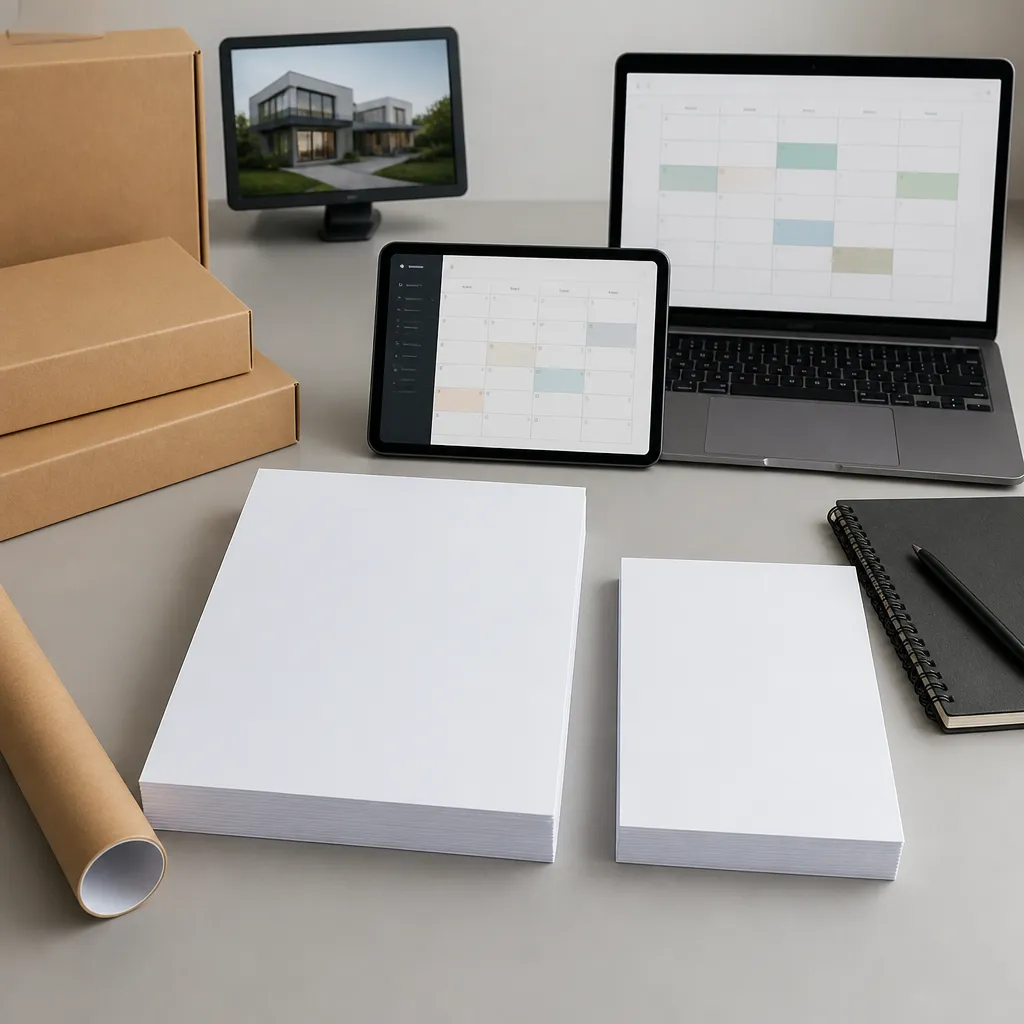
Start with one office, measure what works for three months and then roll the process out to others. A pilot site shows you which content earns enquiries and which frames are ignored. Copying a failed setup across the network multiplies the cost without improving results.
Frequently Asked Questions
Is a digital window display worth it for a small real estate agency?
It can be, if the agency has a busy frontage and a team willing to keep the content current. A single well-run screen showing listings and sold results often does more for local recognition than a larger, neglected setup. Start small, measure enquiries for a few months and expand only if the numbers justify it.
What should a real estate window display show first?
Start with listings and sold results, because they are the most relevant information for people walking past. Recent sales in the same street are especially effective, since they show local activity. Add open home times and suburb snapshots once the basic content rhythm is working.
How often should the content on a window screen change?
Listing and open home frames should change whenever the information changes, which often means several times a week. Sold results should be refreshed as soon as they are confirmed. Run a fixed weekly review to remove anything out of date, because stale content damages trust quickly.
Can a window display be updated remotely?
Remote content management over WiFi lets you change frames from another location, which is essential for multi-office agencies. Check that the software includes scheduling, so content appears at the right time without someone at the office. Ask how the system handles connection loss, because a screen that goes blank overnight wastes the investment.
Do window displays suit all shopfronts in New Zealand?
Most shopfronts can take a display, but the hardware must match the sun exposure, glass depth and mounting options. A window that takes hard afternoon sun needs sunlight-readable or UV-protected hardware, and a narrow frontage may suit a hanging cable LCD better than a wall-mounted unit. Get the site assessed before choosing a product.
How do I know if the window is generating enquiries?
Give window-driven contacts a clear source in your CRM, such as a dedicated phone number or a short web address printed near the screen. Ask every new enquiry how they found the agency. Compare those answers over several months to see whether the display is producing conversations, viewings and appraisals.
What has your agency learned from running a window display, whether the results were good or disappointing? Share your experience, because practical lessons from people who have run the screen every day are worth more than any spec sheet.